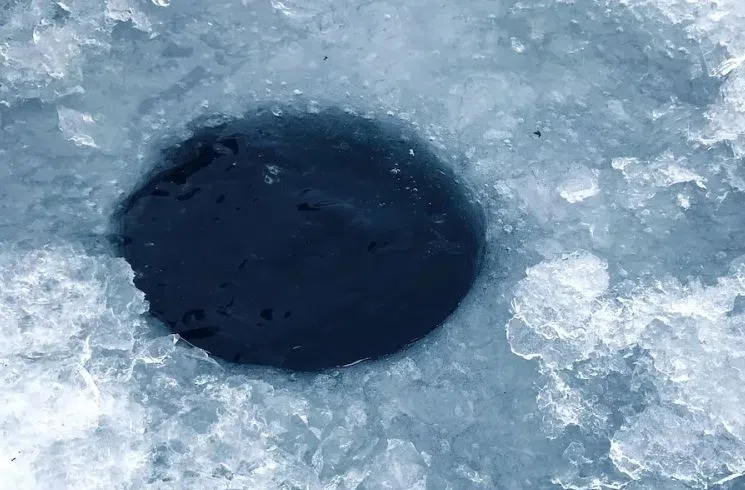
The OPP reminds us that no ice is safe ice.
They want us all to be safe over the winter and are sharing some important reminders before you head out on the ice.
Keep in mind that ice isn’t as thick on waters with faster currents, like the Rideau or Mississippi Rivers.
You want the ice to be 15 cm for walking or skating alone; 20 cm for skating parties or games; and, 25 cm for snowmobiles.
Thickness is just one factor. Weather conditions and the type of body of water will also factor in to ice strength.
Check with local authorities for information on local ice conditions before heading out.
Here are the safety tips released by the OPP:
Factors Impacting Ice Thickness
Many factors affect ice thickness, including type of water, location, time of year and other environmental factors such as:
- Water depth and size of the body of water;
- Currents, tides and other moving water;
- Fluctuations in water levels;
- Logs, rocks and docks absorbing heat from the sun;
- Changing air temperature; and,
- Shock waves from vehicles traveling on the ice.
Ice Colour
- The colour of ice may be an indication of its strength.
- Clear blue ice is strongest.
- White opaque or snow ice is half as strong as blue ice. Opaque ice is formed by wet snow freezing on the ice.
- Grey ice is unsafe. The greyness indicates the presence of water.
Minimum Ice Thickness Guidelines
- 15 cm for walking or skating alone;
- 20 cm for skating parties or games; and,
- 25 cm for snowmobiles.

Comments